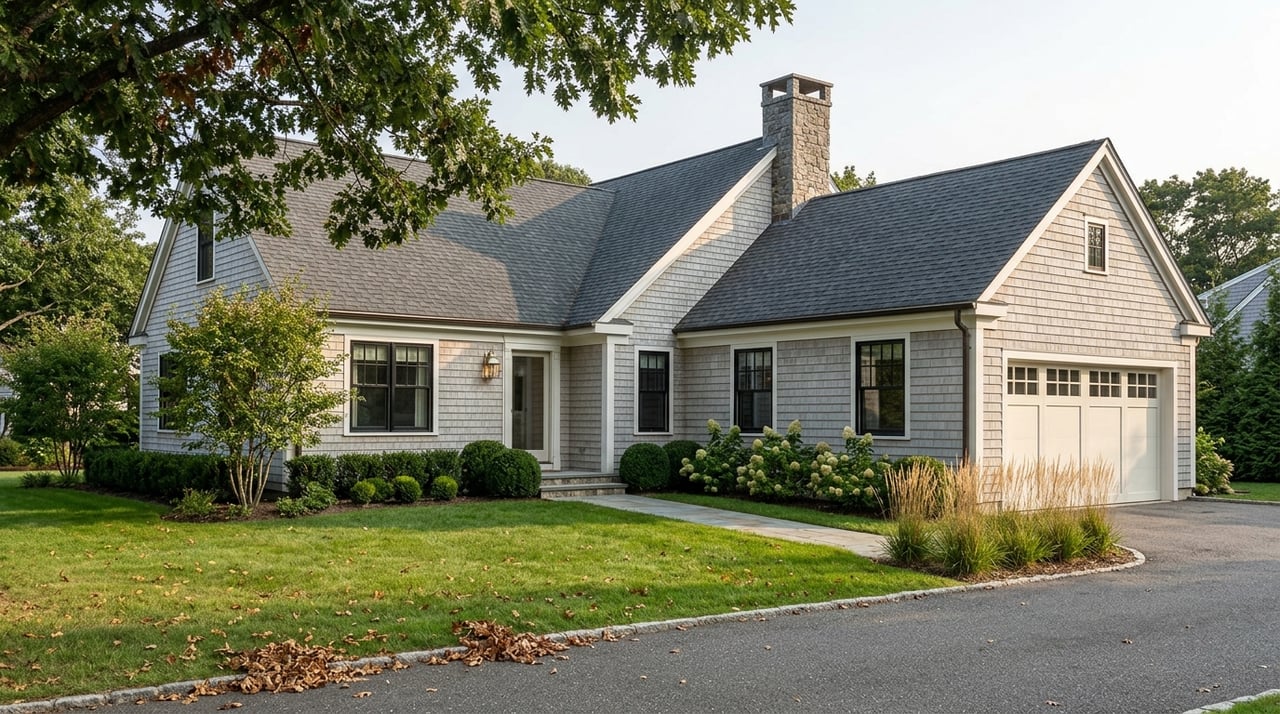
Chapel Hill In Middletown: How This Hamlet Stands Out
July 16, 2026
July 16, 2026
If you are looking at Middletown and wondering which areas feel the most distinct, Chapel Hill deserves a closer look. This small historic hamlet offers something different from a typical neighborhood: preserved village character, older homes with real architectural history, and access to the wider amenities that make Middletown practical for everyday life. If you want to understand what sets Chapel Hill apart, and whether it may fit your goals as a buyer or seller, this guide will walk you through the details. Let’s dive in.
Chapel Hill is not best understood as a large subdivision or a broad modern neighborhood. In Middletown Township’s description, it is a small historic village district in the central part of town, clustered along King’s Highway East between Chapel Hill Road and Stillwell Road.
The township notes that Chapel Hill sits on the flat summit of a 200-foot ridge and includes about 17 buildings plus outbuildings. That small scale is a big part of why it feels so different from surrounding residential areas.
Chapel Hill is also one of Middletown’s five historic districts. That designation helps explain why the area has a strong sense of identity and why its built environment feels more preserved than many nearby pockets of town.
The biggest difference is character. Chapel Hill reads more like a historic village pocket than a conventional neighborhood with repeated home styles and standardized lots.
According to Middletown Township, the district is relatively free from intrusions, even though surrounding land has been subdivided and developed residentially. In simple terms, that means Chapel Hill has held onto a more intact historic feel while nearby areas have changed over time.
For many buyers, that creates a setting that feels quieter and more visually distinctive. For sellers, that same rarity can make the area especially appealing to buyers who want something with personality rather than a more typical suburban layout.
Chapel Hill’s housing stock is one of its defining features. Middletown describes the district as being dominated by 18th- and 19th-century frame residences, with most homes being one-, one-and-a-half-, or two-story structures.
Many of these homes have rectangular or square-with-ell plans. The district also includes buildings that once served other roles, including former taverns, a former store, and the former Chapel Hill School, all of which are now used as residences.
Most homes sit close to the road and on irregular lots. That layout is very different from what you see in newer developments, where homes often follow more standardized setbacks and lot shapes.
If you are drawn to older architecture, mature surroundings, and a sense of place that developed over time, Chapel Hill stands out. If you prefer brand-new construction or a more predictable lot configuration, this area may feel less aligned with your wish list.
Chapel Hill’s roots go back a long way. The area began as High Point around 1700 and was later renamed after an 1809 Baptist chapel.
Even though the chapel itself was eventually destroyed, Middletown notes that the neighborhood still survives as an extant village character. That is an important detail because it helps explain why Chapel Hill feels historic in more than name alone.
For buyers, that history adds context to the homes and streetscape. For owners, it reinforces why this hamlet is often seen as one of Middletown’s more specialized residential settings.
Chapel Hill itself is small and quiet, which is part of the appeal. At the same time, many of the conveniences you would rely on day to day come from the broader Middletown network rather than from the hamlet itself.
Middletown’s resident and recreation resources highlight parks, playgrounds, community facilities, community events, Poricy Park programs, a senior center, and township preschool. The township also points to a public library, an arts center, extensive parks and open space, and access to the Henry Hudson Trail.
That creates an appealing balance for the right buyer. You can enjoy the more tucked-away, historic feel of Chapel Hill while still benefiting from the larger township’s recreational and civic resources.
For many buyers, one of Chapel Hill’s strongest practical advantages is that it pairs a quieter residential setting with useful commuter access. Middletown Township notes that residents have parking at or near the train station, Academy bus stops on Route 36, and NJ Transit bus stops on Route 35, Route 36, Route 520, and Leonardville Road.
NJ Transit identifies Middletown New Jersey Station as a North Jersey Coast Line station. That matters if you commute to New York City or other North Jersey job centers and want transportation options beyond driving alone.
This is one reason Chapel Hill can appeal to buyers who want historic character without giving up convenience entirely. It is not just about looks. It is also about how the area functions in real life.
If you are comparing neighborhoods in Middletown, Chapel Hill stands out less because of price and more because of form and feel. This is not the place to look if you want a large modern development, a retail-oriented walkable setting, or a neighborhood built around uniform homesites.
Instead, Chapel Hill offers a rarer combination: preserved village character, older homes, a quiet residential setting, and access to Middletown’s wider amenity and commuter network. That mix is not common, even within a large township.
Because Middletown identifies only five historic districts, Chapel Hill belongs to a relatively limited group of places with this kind of setting. For buyers who care about architectural character and a more established streetscape, that can be a meaningful distinction.
When evaluating Chapel Hill real estate, it helps to think of it as a micro-market. With only about 17 buildings in the historic district, a single sale can have an outsized effect on how pricing appears from the outside.
That is why broader Middletown context matters. Realtor.com’s June 2026 market summary for Middletown shows a median listing price of $789,950, a median sold price of $722,500, a median price per square foot of $359, and median days on market of 27.
The same source reports 285 active listings and says homes sold for about 104% of asking price on average, which it characterizes as a seller’s market. At the 07748 ZIP code level, the median listing price was $736,950 and median days on market was 24.
Those numbers are helpful benchmarks, but they should not be treated as precise Chapel Hill statistics. In a small historic pocket like this, condition, renovation level, lot characteristics, and buyer demand for a specific home can move value more dramatically than in a larger neighborhood.
If you own a home in Chapel Hill, the strongest selling point is usually not that your property fits a broad subdivision comp set. It is that your home may offer a setting and character profile that is hard to replicate elsewhere in Middletown.
That can be a real advantage, but it also means pricing needs care. In a micro-market, one over-improved sale or one estate-condition transaction can skew expectations quickly.
This is where local knowledge matters. A thoughtful pricing strategy should weigh the broader Middletown market, relevant 07748 context when appropriate, and the individual features that make your property more or less competitive within a very small pool.
Chapel Hill tends to be a strong fit for buyers who value:
It may be less ideal if you are looking for:
That does not make Chapel Hill better or worse than other parts of Middletown. It simply makes it more specific, which is often exactly what the right buyer wants.
Chapel Hill stands out because it offers something hard to manufacture: authenticity. Its small scale, historic district status, older housing stock, and preserved village form give it a personality that feels distinct within Middletown.
At the same time, it still benefits from the larger township’s transportation options, parks, recreation resources, and civic amenities. That blend of character and practicality is what gives Chapel Hill lasting appeal.
If you are buying, the key is to evaluate Chapel Hill on its own terms rather than expecting it to behave like a larger neighborhood. If you are selling, the opportunity is to position your home around what makes this hamlet rare in the first place.
If you are considering a move in Middletown and want practical guidance on how Chapel Hill compares with other local options, Katherine Raftery can help you evaluate the market with a clear, local, data-driven approach.



Kate specializes in buyer and seller representation, luxury homes, relocations, first-time buyers, and downsizers, working across a wide range of price points.