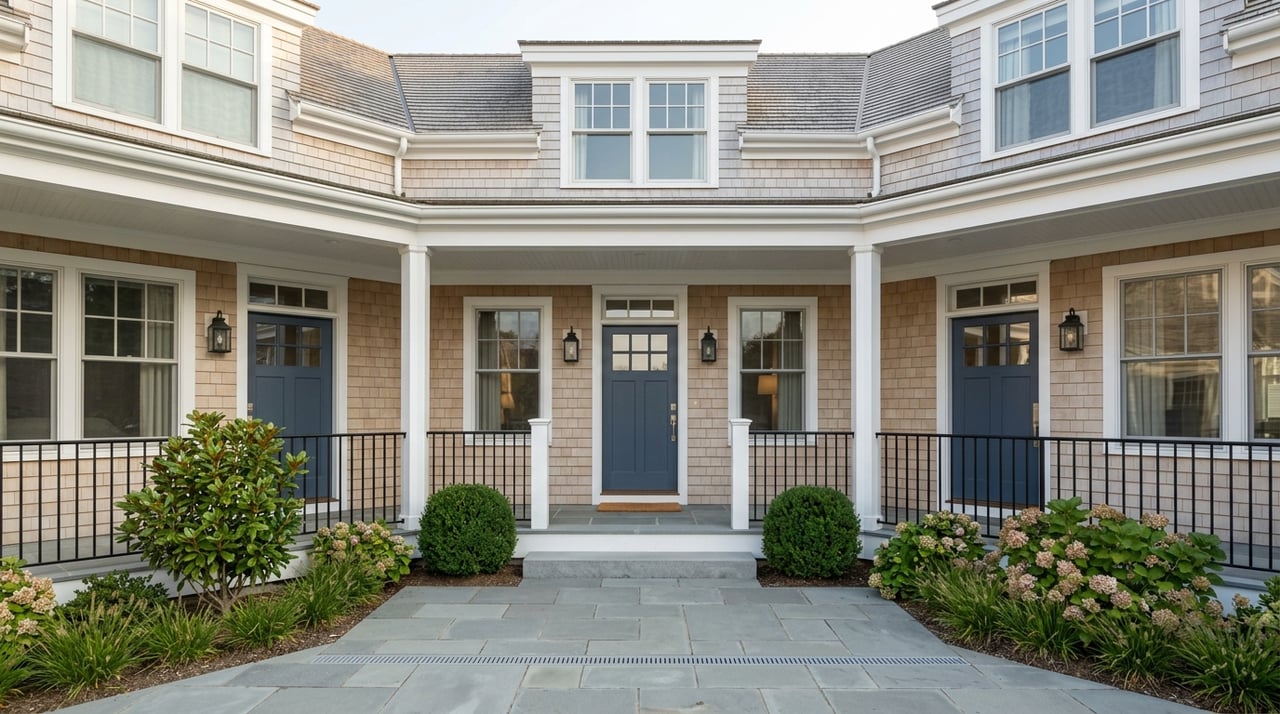
Your Monmouth Beach Guide to Condos and Townhomes
July 9, 2026
July 9, 2026
Wondering whether a condo or townhome is the right way to enjoy Monmouth Beach? If you love the idea of a shore address but do not want the full upkeep of a detached home, attached living can be a smart path to consider. In a built-out coastal market where price, maintenance, amenities, and flood exposure all matter, the right decision comes down to how you want to live and what you want to carry month to month. Let’s dive in.
Monmouth Beach is a small coastal borough with Atlantic Ocean frontage and access to the Shrewsbury River. Because the borough is already largely built out, condo and townhome options play an important role in the resale market.
According to the borough housing plan based on 2023 ACS data, Monmouth Beach had 1,884 total housing units, with 81.2% owner-occupied among occupied units. The housing mix included 47.1% one-unit detached homes, 11.6% one-unit attached homes, and 27.2% units in buildings with 20 or more units. Only 29 units were built in 2020 or later, which helps explain why attached homes remain a meaningful option rather than a small corner of the market.
Price is another reason buyers look closely at condos and townhomes here. Current public listings show condo options beginning well below many detached homes, while detached listings in Monmouth Beach start at a much higher price point. For some buyers, that gap can make attached housing a more practical way to enter the borough.
In Monmouth Beach, condo living often means trading private yard space for shared amenities and services. That lifestyle can appeal to buyers who want convenience, building-level support, and easier day-to-day ownership.
Some of the borough’s better-known condo communities reflect that pattern. The Shores Condominium Association reports 132 apartment-style condos in two towers, along with two pools, a fitness center, tennis, a community room, private beach access, onsite management, onsite maintenance, janitorial service, porter service, and 24/7 concierge.
The Admiralty also presents an amenity-rich oceanfront setup, with a private beach, pool, tennis and pickleball courts, a heated saltwater pool, a fitness room, and social spaces. The Channel Club Tower similarly highlights water views and a high-rise lifestyle with building amenities. These examples show how attached housing in Monmouth Beach often centers on shared access, service, and waterfront lifestyle.
Not every attached home functions the same way. Some condo communities have broad association responsibility for common areas and exterior maintenance, while some fee-simple townhouse communities may leave more building upkeep to the individual owner.
That difference matters. New Jersey’s Bureau of Housing Inspection notes that in some townhouse communities, if the association has no residential building maintenance responsibility, owners may be more directly responsible for upkeep. In practical terms, one attached home may feel close to lock-and-leave ownership, while another may operate more like a single-family house with shared rules.
Purchase price is only part of the story in Monmouth Beach. The better comparison is usually total ownership cost.
Recent public listings show HOA fees that can range from the hundreds per month upward. Examples include about $348 at 70 Wharfside Drive, about $661 to $672 at some Wharfside units, and about $717 to $817 at some units at 1 Channel Drive and 55 Ocean Avenue.
Those fees may cover items such as trash, common area upkeep, heat, lawn maintenance, pool service, snow removal, and water, depending on the property. That can reduce the number of separate bills and service contracts you manage yourself, but it still affects your monthly carrying cost.
Here is the tradeoff many buyers are weighing:
| Option | Potential upside | Potential tradeoff |
|---|---|---|
| Condo | Lower entry price, shared amenities, less exterior upkeep | HOA fees, shared rules, less privacy |
| Townhome | More separation than a condo, possible simpler layout | Maintenance responsibility can vary by community |
| Detached home | More privacy, more land, more control | Higher purchase price and more direct upkeep |
If beach access is part of the appeal, it is worth looking beyond the home itself. Seasonal beach and pool costs can still be part of the budget, even if you buy in a condo community.
The Borough’s 2026 Bathing Pavilion rates list resident beach and pool badges at $185 for ages 12 to 64 and nonresident badges at $460. The borough also lists member and seasonal beach badges at $110, guest cards at $90, parking tags at $70, umbrella spaces at $45, and daily wristbands at $15.
For buyers planning to spend a lot of time by the water, these costs may be manageable. Still, they belong in your overall lifestyle budget, especially if you are comparing a Monmouth Beach condo with a home in another nearby town.
In any coastal market, flood risk deserves close attention. In Monmouth Beach, that review should be part of your due diligence from the start.
The borough’s flood information page says the revised FIRM has been effective since June 20, 2018. The flood code also references effective FEMA map revisions from June 15, 2022, and states that more restrictive federal, state, or local flood data governs development decisions.
New Jersey consumer guidance also notes that standard homeowners insurance does not cover flood damage, and NFIP flood insurance usually takes about 30 days to become effective. For buyers, that means it is important to understand both building-level flood exposure and how insurance may work before you finalize a purchase.
Older coastal buildings can come with major long-term maintenance needs. That is why reserve funding and capital planning should be a central part of your review.
New Jersey’s 2024 structural-integrity legislation added current reserve-study requirements for planned real estate associations, including a capital reserve study and a 30-year funding plan for common assets. For a Monmouth Beach buyer, this makes it especially important to ask how the association is planning for future repairs and replacements.
If a building has deferred maintenance, limited reserves, or a pattern of large special assessments, your monthly cost picture can change quickly. A lower list price does not always mean lower ownership cost over time.
In Monmouth Beach, strong condo and townhome due diligence means looking past finishes and views. You want to understand how the building or community operates, what it covers, and what responsibilities will be yours.
New Jersey’s DCA explains that common-interest communities such as condominiums are regulated under the Planned Real Estate Development framework. The state also provides guidance around access to financial records, public meetings, and alternate dispute resolution.
State administrative rules generally require governing board meetings of condominiums and other planned real estate developments to be open to unit owners. The rules also require minutes of open meetings to be made available before the next open meeting, along with a posted annual open-meeting schedule.
That gives buyers a solid framework for what to request and review. Before you move forward, consider verifying:
If you have a pet, do not assume that a pet-friendly town means a pet-friendly building. You will want to review both borough rules and the community’s own policies.
Monmouth Beach states that it is unlawful to allow dogs, cats, or other domestic animals in public parks and the Monmouth Beach Bathing Pavilion. A building may also have its own rules on size, breed, number of pets, or common-area use.
That makes pet policy one of the easier details to overlook and one of the most important to confirm early.
If you are buying with plans to renovate, do not focus only on the interior design side. In attached housing, approvals can come from more than one place.
The borough’s construction department posts permit and floodplain forms online, which is a useful reminder that some projects may require municipal review. In many communities, you may also need association approval before work begins.
For buyers considering updates to windows, balconies, exterior doors, or layout changes, it is wise to understand that process before you commit.
Attached housing in Monmouth Beach often works best for buyers who prioritize convenience, waterfront access, and lower day-to-day exterior maintenance. That may include second-home buyers, downsizers, and buyers who want a foothold in the borough without stepping into the detached-home price range.
It may be less appealing if you want a large private yard, maximum control over exterior decisions, or fewer shared rules. In that case, a detached home may still be the better fit, even if the upfront cost is higher.
The real question is not just whether a condo costs less than a house. It is whether the total ownership experience matches the way you want to live.
If you are weighing condo, townhome, or single-family options in Monmouth Beach, working with a local advisor can help you compare not just list prices, but rules, reserves, flood exposure, and long-term value. For thoughtful guidance tailored to your goals, connect with Katherine Raftery.
Kate specializes in buyer and seller representation, luxury homes, relocations, first-time buyers, and downsizers, working across a wide range of price points.